

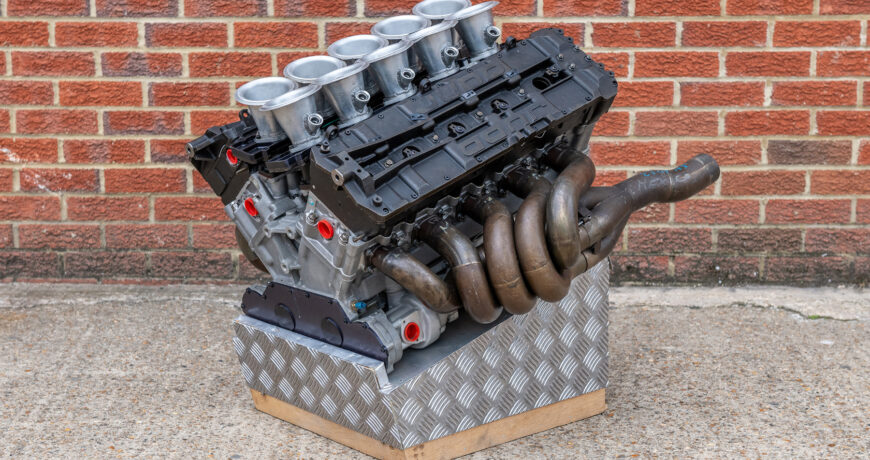
judd v10 engine for sale Leave a comment
Judd V10 Engine for Sale: A Complete Guide to Buying a Legendary Racing Engine
The Judd V10 engine is one of the most iconic naturally aspirated engines in motorsport history. Built by Engine Developments Ltd., Judd V10s were used in Formula One, Le Mans Prototypes, and Hillclimb events. Known for their high-revving sound, reliability, and performance, these engines are now collectors’ items and rare finds on the secondary market.
Table of Contents
- Introduction to the Judd V10 Engine
- History of Judd Engines
- Technical Specifications of Judd V10 Engines
- Judd V10 Variants
- Applications of the Judd V10
- Performance Characteristics
- Why Buy a Judd V10 Engine?
- Where to Find a Judd V10 Engine for Sale
- Pricing and Cost Considerations
- Buying Used vs. Rebuilt Judd V10 Engines
- Maintenance and Support for Judd Engines
- Authenticity and Documentation
- Import/Export Tips for Judd Engines
- Tips for Installing a Judd V10 in a Project Car
- Judd V10 Engine Sound and Exhaust Setup
- Collector Value and Investment Potential
- Racing With a Judd V10 Today
- Conclusion: Is a Judd V10 Worth Buying?
- Frequently Asked Questions (FAQs)
1. Introduction to the Judd V10 Engine
The Judd V10 engine is one of the most iconic naturally aspirated engines in motorsport history. Built by Engine Developments Ltd., Judd V10s were used in Formula One, Le Mans Prototypes, and Hillclimb events. Known for their high-revving sound, reliability, and performance, these engines are now collectors’ items and rare finds on the secondary market.
Whether you’re a motorsport enthusiast, collector, or racing team, a Judd V10 engine for sale offers a unique opportunity to own a piece of racing history.
2. History of Judd Engines
Founded in 1971 by John Judd and Sir Jack Brabham, Engine Developments Ltd. (Judd) has built power units for:
- Formula One teams (1980s-1990s)
- Le Mans Prototype cars
- Formula 3000
- Hillclimb and historic racing events
The Judd V10 series emerged in the 1990s when F1 regulations allowed 10-cylinder engines. These engines became legends for their sound, power delivery, and engineering brilliance.
3. Technical Specifications of Judd V10 Engines
Depending on the variant, Judd V10 engines share the following specifications:
| Feature | Specification |
|---|---|
| Configuration | 72° or 90° V10 |
| Displacement | 3.0L to 5.0L |
| Max RPM | 11,000–12,500 RPM |
| Power Output | 600 – 750+ HP |
| Fuel System | Electronic fuel injection |
| Valvetrain | DOHC, 4 valves per cylinder |
| Cooling | Water-cooled |
| Weight | ~120–140 kg (varies) |
| Materials | Aluminum alloy block and heads |
Popular variants include:
- Judd GV10 (F1 spec)
- Judd GV4 (Le Mans/Endurance)
- Judd GV5.0 S2 (used in hillclimbs)
4. Judd V10 Variants
Here’s a quick comparison of Judd V10 variants:
4.1 Judd GV10
- Used in Formula One (e.g., Lotus, Brabham)
- 3.5L displacement
- 700+ HP at 12,000 RPM
4.2 Judd GV4
- Le Mans Prototype engine
- 4.0L naturally aspirated
- 650 HP
- Used in Pescarolo Sport and other LMP1 cars
4.3 Judd GV5 S2
- 5.0L variant used in modern Hillclimb competitions
- 750+ HP
- Known for incredible torque and dramatic sound
5. Applications of the Judd V10
Judd V10 engines have powered:
- Formula One cars (Lotus, Brabham, Scuderia Italia)
- Le Mans Prototypes (LMP1 and LMP2)
- Hillclimb cars (Gould GR55, Reynard 2KQ)
- Track day specials
- Private racing builds
Due to their performance and reliability, Judd V10s are still used today in vintage racing and historic motorsport events.
6. Performance Characteristics
Judd V10 engines are famous for:
- Linear power delivery
- Sky-high redlines (up to 12,500 RPM)
- Distinctive V10 scream
- Responsive throttle
- Exceptional reliability in endurance racing
They offer Formula One-level performance with modern serviceability.
7. Why Buy a Judd V10 Engine?
Buyers are typically:
- Motorsport enthusiasts looking for performance
- Collectors seeking rare and iconic items
- Hillclimb or historic racing teams
- Project builders making high-end custom builds
Key reasons include:
- Racing pedigree
- Performance and sound
- Mechanical simplicity compared to modern turbo engines
- Limited production numbers = high collector value
8. Where to Find a Judd V10 Engine for Sale
Online Listings:
- RaceCarsDirect.com
- Classic Driver
- Bring a Trailer
- eBay Motors (rare, but possible)
Specialized Dealers:
- Engine Developments Ltd. (UK)
- Xtec Engineering
- Iconic Auctioneers
- CANEPA (USA)
Auctions:
- Gooding & Co.
- Bonhams
- RM Sotheby’s
- Mecum Auctions
Always ensure the seller provides:
- Service history
- Dyno sheets
- Serial numbers
- Rebuild records
9. Pricing and Cost Considerations
Prices vary based on condition and variant:
| Condition | Estimated Price Range |
|---|---|
| Used, unrebuilt | $45,000 – $80,000 |
| Rebuilt, race-ready | $85,000 – $150,000 |
| With documentation and racing history | $150,000+ |
| Complete car with Judd V10 | $250,000 – $1M+ |
Don’t forget:
- Shipping
- Customs
- Engine cradle/ECU costs
- Installation & tuning
10. Buying Used vs. Rebuilt Judd V10 Engines
Used Engines:
- May need inspection or rebuild
- Lower upfront cost
- Riskier unless from a reputable seller
Rebuilt Engines:
- Refurbished to race-ready specs
- Backed by engineering support
- Higher cost but plug-and-play ready
Recommended: Buy directly from Engine Developments Ltd. if possible.
11. Maintenance and Support for Judd Engines
You’ll need:
- Regular dyno testing
- Inspection after race hours
- Special tools for timing and valvetrain work
- Parts from Judd or specialist engine shops
Judd offers full overhaul and rebuild services, including:
- Pistons, bearings, camshafts
- Updated electronics and ECUs
12. Authenticity and Documentation
Ensure your Judd V10 includes:
- Engine ID and build sheet
- Dyno printouts
- Maintenance log
- Provenance (e.g., ex-Le Mans or F1)
Buyers of high-end engines often get a certificate of authenticity from Judd.
13. Import/Export Tips for Judd Engines
Tips:
- Use a specialized motorsport shipping firm
- Check ITAR/export regulations if shipping from the USA
- Prepare EPA compliance letters if importing to the USA
Customs duties vary:
- EU: 0-10% on used engines
- USA: 2.5% on automotive parts
- UK: Check post-Brexit rules
14. Tips for Installing a Judd V10 in a Project Car
- Chassis fabrication may be required
- Engine management system (Motec, Magneti Marelli)
- High-performance cooling system
- Sequential gearbox compatibility (e.g., Xtrac, Hewland)
Recommended car types:
- LMP chassis (e.g., Dallara, Courage)
- Tube-frame hillclimb cars
- Radical or Ultima track cars
15. Judd V10 Engine Sound and Exhaust Setup
One of the biggest appeals is the sound. A Judd V10 at 12,000 RPM sounds like an F1 car.
To replicate the iconic scream:
- Use equal-length tuned headers
- Lightweight titanium exhaust
- Consider custom mufflers for sound tuning
Check YouTube for:
- Gould GR55 Judd V10
- Hillclimb V10 onboard videos
16. Collector Value and Investment Potential
Judd engines are appreciating assets due to:
- Rarity
- Motorsport history
- High-quality engineering
Example: A GV4 from a Le Mans-winning car can sell for over $200,000.
Engines with provenance (e.g., 1990s F1 use) are the most valuable.
17. Racing With a Judd V10 Today
Judd V10 engines are still raced in:
- European Hillclimb Championship
- Historic F1
- Classic Endurance Racing
- Track day events
Support is available from:
- Judd factory technicians
- Third-party race prep shops
18. Conclusion: Is a Judd V10 Worth Buying?
A Judd V10 engine for sale offers a unique mix of:
- Racing heritage
- Exhilarating performance
- Screaming sound
- Long-term collectibility
While the cost and complexity are high, the reward of owning and hearing a Judd V10 at full throttle is unmatched. Whether you’re a builder, collector, or racer, this engine represents the pinnacle of analog motorsport engineering.
19. Frequently Asked Questions (FAQs)
Q1: How much does a Judd V10 engine cost?
A Judd V10 typically costs $85,000 to $150,000 depending on condition, variant, and rebuild status.
Q2: Can I buy a Judd V10 directly from the manufacturer?
Yes, Engine Developments Ltd. still supports sales, rebuilds, and spares.
Q3: What cars can a Judd V10 be installed in?
They are used in:
- Le Mans Prototypes
- Hillclimb cars
- Custom-built track cars
- Occasionally swapped into GT or classic cars
Q4: Is the Judd V10 street-legal?
No. Due to noise, emissions, and lack of catalytic converters, they are not street-legal in most regions.
Q5: How many Judd V10 engines were made?
Exact numbers are unclear, but fewer than 100 GV4 and GV5 units were made, making them extremely rare.
Q6: Are Judd V10 parts still available?
Yes. Engine Developments offers rebuild kits, gaskets, pistons, and electronics.
Q7: What’s the Judd V10 redline?
Redlines range from 11,000 to 12,500 RPM, depending on the model and tuning.
Q8: Where can I hear a Judd V10?
Search YouTube for:
“F1 Judd V10 sound”
“Judd V10 Hillclimb”
“Gould GR55 Judd”
